

The world of sports card collecting is built on nostalgia, history, and authenticity. As cards age, and as more vintage collections surface from attics, basements, and shoeboxes, collectors are increasingly confronted with a common question: What can I safely do to improve a card’s condition without crossing ethical or market boundaries?
The answer lies in understanding the critical distinction between restoration and alteration.
Restoration refers to methods that clean, preserve, or stabilize a card, helping return it closer to its original state without adding or removing original material.
Alteration, on the other hand, involves changing the card’s structure, appearance, or composition in a way that goes beyond preservation—often with the intent to enhance value or mask defects.
This difference matters. In a hobby where authenticity and originality drive value, failing to distinguish between restoration and alteration can affect grading outcomes, undermine long-term collectability, and create ethical dilemmas when cards change hands.
Whether you’re rescuing a vintage card from scrapbook glue or debating whether a pressed corner counts as tampering, knowing where the line is drawn protects both the card’s integrity and your reputation as a collector.
In this article, we’ll explore what truly separates restoration from alteration, why the distinction is essential, and how collectors can approach card care responsibly in a market that values transparency as much as condition.
What Constitutes Sports Card Restoration?
When collectors talk about “restoring” a sports card, they’re usually referring to actions taken to improve a card’s condition without fundamentally changing what it is. But in the hobby, not all improvements are viewed the same way. To understand what restoration really means and how it differs from alteration, it helps to break down the terminology clearly.
Restoration: Bringing a Card Back Toward Its Original State
Restoration refers to techniques aimed at stabilizing, cleaning, or preserving a card so that it more closely resembles its original manufactured condition. In restoration, you’re not adding anything artificial to the card; you’re simply removing foreign materials or correcting damage caused by age, storage, or handling.
Common examples of restoration include:
- Soaking in distilled water to remove scrapbook paper, tape, or glue
- Pressing to gently flatten warps or bends
- Removing surface dirt and residue
- Light humidification to relax paper fibers
- Drying a moisture-exposed card to prevent further warping
The key principle: Restoration aims to return the card to its previous state, prioritizing preservation and recovery over enhancement. Restoration does not add or remove any chemicals, colors, or materials to the card.
Many collectors accept restoration for personal-use cards, especially vintage items affected by poor storage. However, even mild restoration can affect grading outcomes and resale value, which is why it requires transparency when cards change hands.
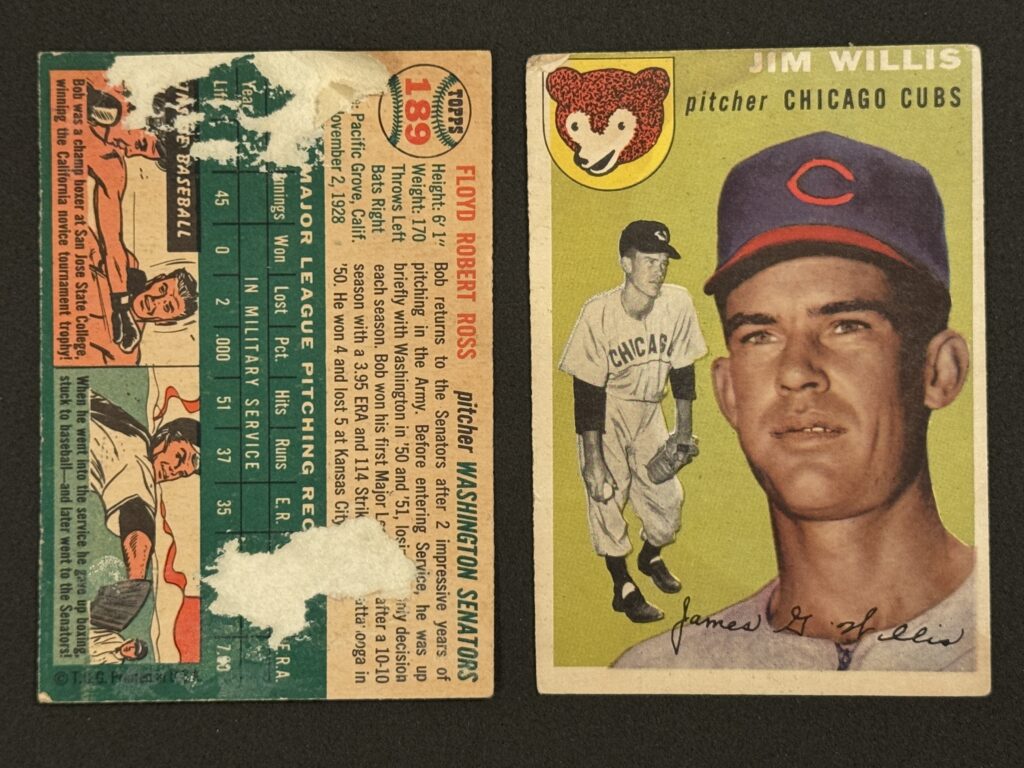
Card Restoration Before and After:
Here is an example of two cards that can be safely restored without altering the cards. The card on the left is a 1954 Topps Bob Ross that was removed from a scrapbook. The card exhibits scrapbook paper and glue residue. The card on the right is a 1954 Topps Jim Willis, which exhibits a stain on the top near the Cubs logo and his name.
Both of these cards can be safely restored by soaking them in distilled water and gently drying and pressing them to prevent them from bowing during the drying process.
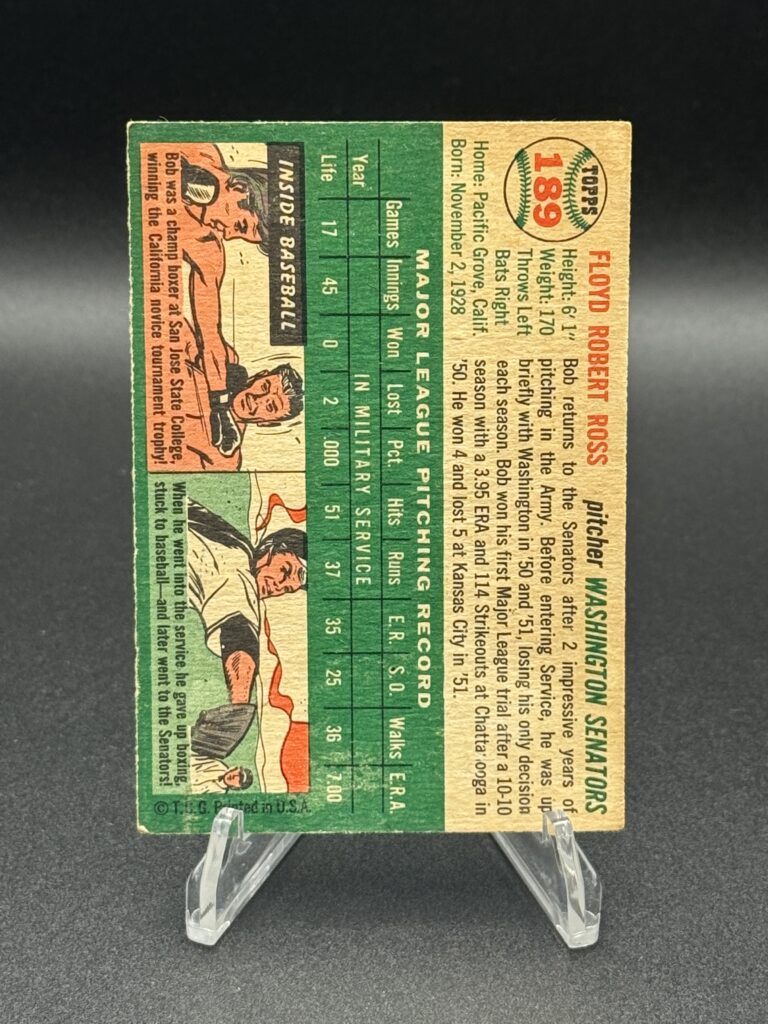
Here is the Bob Ross card after restoration. This was achieved through soaking the card in distilled water and gently brushing the surface with a cotton swab. The glue was water-soluble and easily dissolved, leaving the card in excellent condition. The card was then pressed and dried to prevent it from bowing.
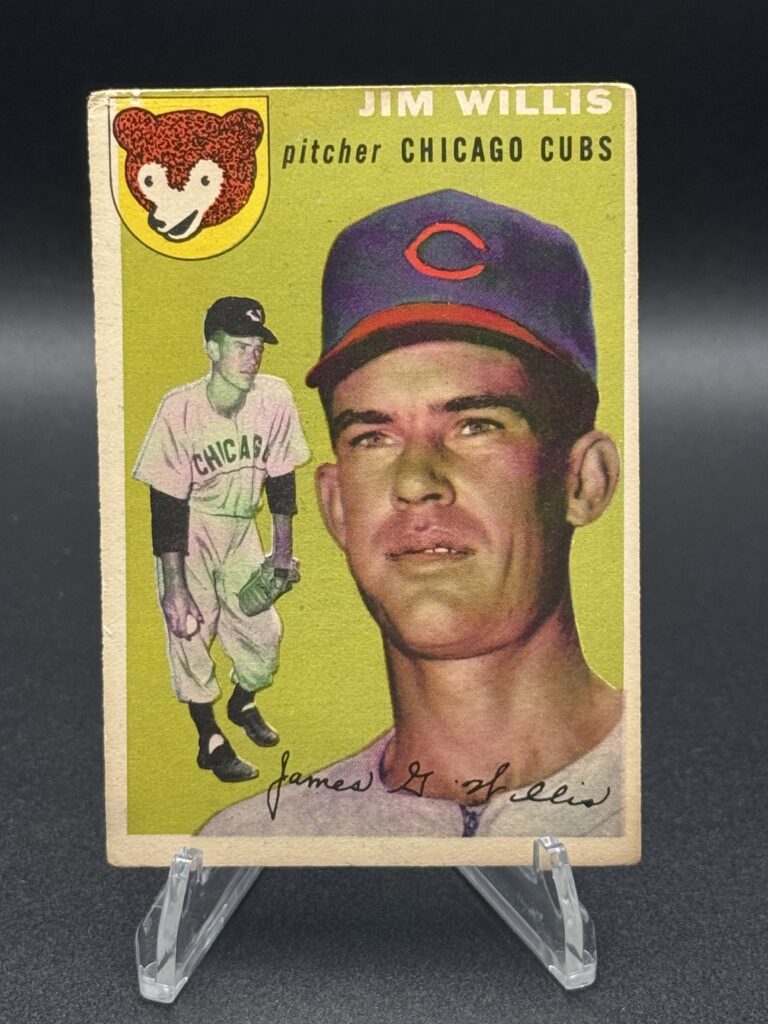
Here is the Jim Willis card after the stain has been gently removed. This was achieved by soaking the card in distilled water and gently brushing the stained area with a cotton swab. The card was then dried for about a week, then placed in a top loader to prevent it from bowing as it continued to dry.
Alteration: Changing the Card’s Original Material or Structure
Alteration, by contrast, refers to any method that adds, removes, or changes a card’s original material, appearance, or structure in a way that goes beyond cleaning or preservation.
Examples of alteration include:
- Trimming edges or corners
- Recoloring, repainting, or using markers to hide wear
- Surface polishing or gloss enhancement
- Filling in paper loss or rebuilding corners
- Removing deep creases by manipulating or replacing fibers
- Using chemicals to clean the card or change gloss, brightness, or color tone
The key principle: Alteration changes the card from its original manufactured form, often permanently, and usually to enhance grade or value.
Alterations are widely condemned within the hobby, and grading companies frequently label altered cards as “Authentic – Altered” or reject them entirely.
Where the Line Gets Blurry
Sports card collectors quickly learn that some actions occupy a gray area. For example:
- Does pressing count as restoration or alteration?
- Is removing glue a basic cleaning or a form of restoration?
- If soaking causes minor paper loss, does that change the classification?
Most in the hobby consider these restorations, not alterations, provided no original material is intentionally removed, and nothing new is added. However, grading companies may still flag certain techniques as “alteration,” especially if the work is extensive or visibly changes the card’s surface.
The Safest Approach:
- If what you’re doing is meant to correct damage or remove foreign material, it is likely restoration.
- If what you’re doing is meant to improve the grade or hide original flaws, it is likely an alteration.
Why the Distinction Matters
Understanding the difference between restoration and alteration is essential because:
- It affects the ethical responsibilities of the seller
- It determines whether restoration must be disclosed
- It impacts grading outcomes
- It influences collector trust and long-term market value
Even good-faith restoration can significantly change how a card is viewed in the marketplace. Being clear about what was done and why helps maintain the integrity of the hobby for everyone.
The two cards restored in this example are from my personal collection. If I ever sell them, I will be happy to disclose that they have been restored for preservation purposes.
Leave a Reply