

Sports card collecting is a growing hobby, and card values are reaching all-time highs. These soaring values bring additional scrutiny to the condition of sports cards for sale in public auctions, at card shows, and among fellow collectors. The better the card’s condition, the higher its value. And that is where sports card restoration comes into play.
Restoring sports cards is one of those things collectors rarely talk about openly, but almost everyone has tried in some small way.
I know what you’re thinking, “not me! I don’t restore cards!”
Have you ever smoothed out a wrinkle or tried to lightly bend a corner back into shape? Then you’ve restored a card.
There is a fine line between preserving a collectible and altering it. For collectors who already understand the basics of grading, cardstock types, and vintage quirks, restoration can be incredibly rewarding, as long as you know what you’re doing and why you’re doing it. Yet restoration carries risks, ethical considerations, and potential consequences for value.
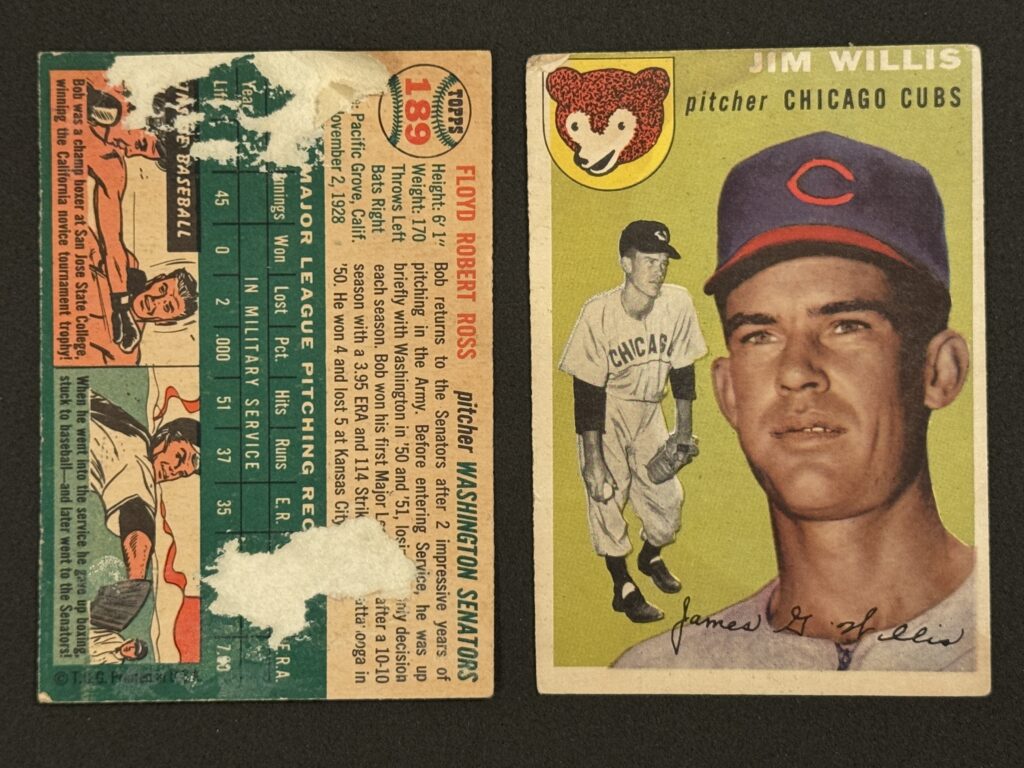
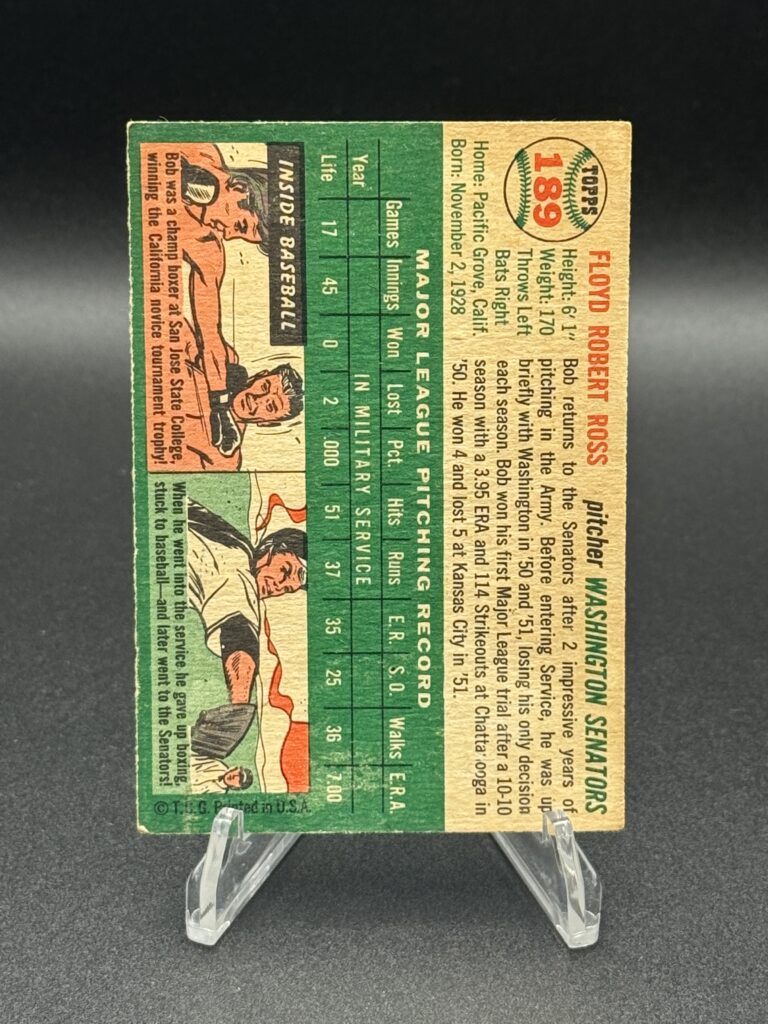
Here are two prime candidates for restoration: a 1954 Topps Bob Ross with scrapbook paper and glue residue, and a 1954 Topps Jim Willis with a stain at the top, likely caused by water damage.
This article walks through the major restoration methods, required supplies, pros and cons, and the important question of disclosure.
To be clear, this isn’t a guide to altering cards, which we define as any method that adds, removes, or changes a card’s original material, appearance, or structure beyond cleaning or preservation.
When Restoration Makes Sense—and When It Doesn’t
When we’re talking about restoring sports cards, we mean making improvements without fundamentally altering the card’s composition. This usually involves cleaning, flattening, or removing foreign objects such as glue or paper.
Most sports card collectors restore cards for two reasons:
1. Personal enjoyment – You want a cleaner, flatter card in your collection.
2. Preservation – The card is deteriorating, and doing nothing will make it worse.
But restoration isn’t magic, and it comes with risks.
Before diving into specific techniques, it’s important to understand where restoration fits into the hobby.
Restoration may be appropriate when:
- You’re dealing with cards intended for your personal collection, not trying to flip them for grading or profit.
- The card has glue, tape, scrapbook paper, or album residue.
- The card is dirty or has moisture damage.
- You want to stabilize a vintage card so it doesn’t keep falling apart.
- The goal is preservation rather than maximizing resale value.
Restoration is not advisable when:
- The card is expensive, and you plan to sell it graded.
- You are uncomfortable risking further damage.
- The card’s defects are structural (deep creases, paper loss) and cannot be fully restored.
In short, restoration should be viewed as a way to stabilize and cosmetically improve, not as a way to magically return a card to pack-fresh condition.
Restoration Methods
1. Soaking
Soaking is one of the most common and often safest restoration techniques, especially for vintage cards stuck to scrapbook pages, bearing surface dirt or minor stains, or minor wrinkles.
Purpose:
- Loosen dirt or remove stains
- Remove glue or scrapbook paper
- Separate cards from album pages or paper residue
How to Do It Safely:
- Use room-temperature distilled water.
- Submerge the card in a shallow dish for a few minutes to several hours, depending on the issue.
- Check every 10-20 minutes; never rush the process.
- After soaking, gently lift the softened paper or glue with your fingers or a soft tool.
Risks:
- Ink bleeding on older vintage cards and certain brands
- Surface fibers lifting
- Corners softening if over-soaked
- Printed surface/paint lifting or being damaged
Soaking can be surprisingly effective, but must be done patiently and with constant monitoring. After soaking the card, carefully dry it to prevent warping.
2. Pressing
Pressing is simply flattening a card between two objects and applying light weight. Pressing is commonly used to reduce/remove minor wrinkles or warping and improve overall presentation.
Why collectors use it:
- To reduce bends or light wrinkles
- To flatten a card that curled or warped during drying
How Pressing Works:
- After the card is slightly humidified (or post-soaking), it’s placed between clean absorbent sheets.
- Weight is applied with books, slabs, or specialized pressing boards.
- The pressure flattens light wrinkles, helps cards dry flat, and improves uniformity.
Risks:
- Over-pressing creates unnatural smoothness or may flatten the card to an unnatural thinness.
- Too much pressure can cause hidden creases to “break through.”
- Pressing cannot repair structural creases that break card fibers.
- Pressing may not remove surface indentations.
Card collectors should aim for gentle pressing—never attempt the heavy mechanical methods seen in comic book restoration. Over-pressed cards look unnaturally flat and may be rejected by grading companies.
3. Removing Wrinkles or Creases
Not all creases are created equal. Surface wrinkles may be improved; deep creases that break the card fibers or surface paint usually cannot.
Techniques for Minor Wrinkle Removal:
- Light humidification or soaking to relax the paper fibers.
- Targeted pressing using soft tools or a small flat weight.
- Smoothing while the card is pliable, then drying under light pressure.
Limitations:
- Deep creases remain visible even if flattened.
- Attempting to “erase” a crease often leads to thinning or glossy patches.
Think of this as minimizing wrinkles, not eliminating them.
4. Removing Scrapbook Paper or Glue Residue
Vintage collectors frequently encounter cards glued into albums or stuck to backing paper. This is common for cards from the 1950s and earlier, as well as for all issues of Topps Venezuela cards, which were designed to be pasted into scrapbooks.
This method generally only works with water-soluble glue, which dissolves in water. Other types of glue, such as those often used for Topps Venezuela sets, are not water-soluble and may remain on the card even after gentle soaking. However, you may still be able to remove scrapbook remnants from cards that were adhered using non-water-soluble glue, even if some of the glue remains on the card back. Patience is the key.
Note: Some pre-war cards are too fragile for soaking; extra caution is required. Always test with a common card or one that has already been damaged beyond repair, so you can better understand the limitations of the card you are working with.
Safe Approaches:
- Soaking to soften the paper or adhesive.
- Gentle scraping with a plastic blade, fingernail, or cotton swab after the backing loosens.
- Removing fibers slowly and evenly, never in chunks.
Warning Signs:
- Back printing begins to lift.
- Color starts to bleed or fade.
- Card layers begin to separate.
If any of these occur, it’s time to stop. Some scrapbook damage is permanent, and aggressive removal may cause more harm than good.
5. Stain Removal
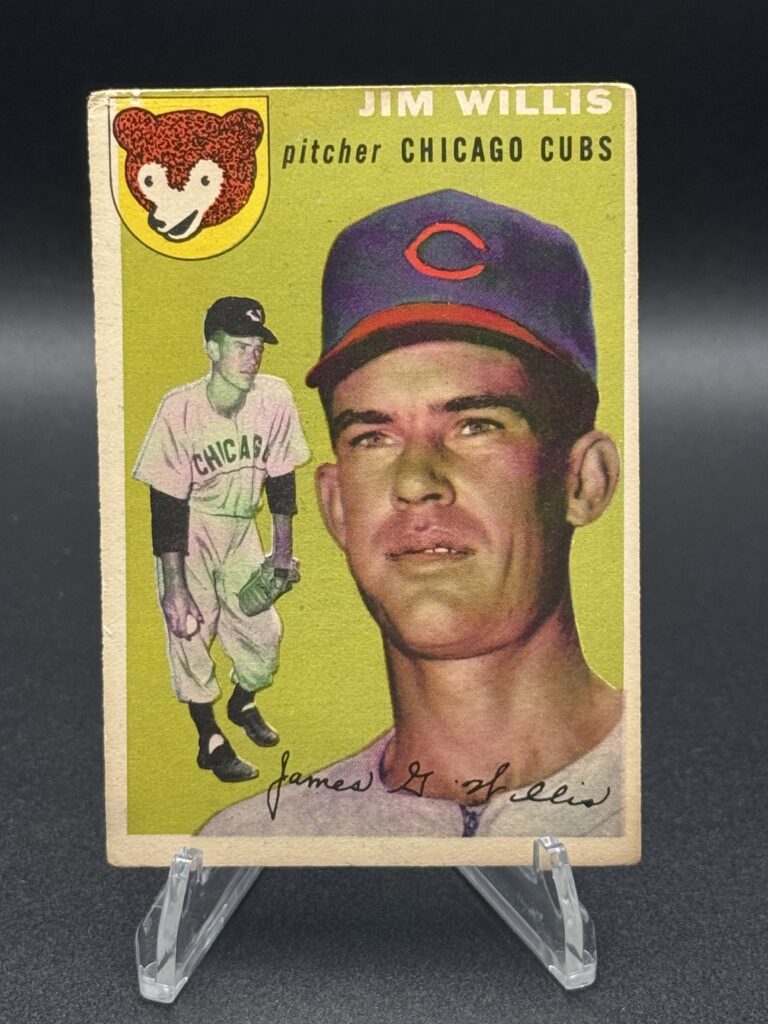
Some stains can be easily removed from sports cards during the soaking process. The 1954 Topps Jim Willis card had a noticeable stain on the top near the Cubs logo and his name. I soaked the card in distilled water for several minutes, then gently worked the area with a cotton swab.
The stain is still slightly visible. However, it has been noticeably reduced. Some stains can be completely removed, while others may remain, depending on the severity and type of stain.
Practicing will help you identify which stains can be removed or improved.
6. Drying the Card
Proper drying ensures the card doesn’t warp or ripple after soaking.
Recommended Drying Method:
- Lay the card between a soft cloth or foam to help absorb water (blotting sheets, coffee filters, a shammy cloth, or foam pads).
- Press the card with gentle pressure. Common methods include placing the item on a table with books on top, using a light weight, or clamping the cloth or foam between acrylic sheets.
- Replace the damp sheets or foam periodically until fully dry.
Dry your cards at room temperature, avoiding artificial heat sources like hair dryers—these can warp or discolor the card.
Supplies Needed for Restoration
Collectors who restore cards should maintain a dedicated kit and work in a clean workspace with good lighting. Common supplies include:
- Distilled water
- Soaking container (the bottom portion of these soap dishes works perfectly)
- A small spray bottle for minor issues
- Blotting paper, coffee filters, a shammy cloth, or foam pads
- Microfiber cloths
- Assorted cotton swabs (fine-tipped swabs and assorted cleaning swabs)
- Plastic scraping tools
- Tweezers
- Flat weights or pressing boards, such as acrylic disks
- Clamps
- Humidity chamber (optional)
- Magnifying glass or jeweler’s loupe
Having the right tools minimizes the chance of accidental damage.
Pros and Cons of Restoring Sports Cards
Sports card restoration should be done primarily for preservation and personal enjoyment. Restoration is a “collector-first” activity, not a “flipper-first” strategy.
Pros
- Improved appearance for personal display collections
- Preservation and increased stability, preventing further deterioration
- Ability to rescue cards stuck to scrapbook pages or damaged by storage
- Better handling, especially for grimy or warped vintage pieces
Cons
- Risk of damage—restoration can easily make a card worse
- Potential devaluation, especially if a card is later graded
- Grading companies consider most restoration to be alteration
- Ethical issues if sold without disclosure
- Over-restoration can look unnatural, raising suspicion
Do You Need to Disclose Restoration? (Short Answer: Yes.)
This is one of the most important—and controversial—topics in the hobby. If you plan to sell or trade the card, you should always disclose that it has been restored.
This is a matter of respect for the hobby and the buyer.
Ethical collectors agree: If a card has been restored in any significant way, it should be disclosed when selling or trading.
Why disclose sports card restoration?
- Grading companies typically classify restoration as alteration.
- Undisclosed restoration can be considered deceptive.
- Trust is crucial in the collecting community. Don’t risk your personal or professional reputation to make a quick buck.
- Buyers deserve transparency about potential risks and their impact on value.
What Requires Disclosure?
- Soaking
- Pressing
- Glue removal
- Humidification
- Heavy cleaning or fiber manipulation
- Anything that changes the card’s original surface or structure
Minor dusting or surface wiping with a microfiber cloth generally doesn’t require disclosure, but anything beyond that should be stated clearly.
Suggested Disclosure Phrase:
- “Card has been restored (soaked/pressed/glue removed) for preservation. Please review photos.”
Conclusion
Restoring sports cards can be incredibly satisfying. You get to rescue damaged pieces of cardboard history and give them new life in your collection. But restoration should be carried out carefully, ethically, and with a full understanding of the risks.
The key is patience. Take your time, use the right tools, and don’t push a card past its safe limit. Restore for preservation, not profit—and when in doubt, disclose. When done thoughtfully, restoration can extend the life of cards while maintaining integrity within the hobby.
Leave a Reply